The Hidden Journey of Pollution: From Your Home to the Ocean and Back
2026-05-01
Chemicals from everyday household products enter our waterways, accumulate in marine life, and find their way back to us. Understanding this hidden journey is the first step to change.
Pollution Doesn't Stay in the Ocean
Most people think of ocean pollution as something that happens far away — oil spills, plastic islands, industrial waste. But the truth is far more personal. The chemicals we use every day — in our laundry detergents, personal care products, household cleaners, and pharmaceuticals — enter our waterways through drains and runoff, and begin a journey that eventually brings them back to us.
The Hidden Journey
It starts at home. When you wash your clothes with a detergent containing PFAS (per- and polyfluoroalkyl substances), that water goes down the drain. It passes through water treatment — but many of these chemicals aren't fully removed. They enter rivers, estuaries, and eventually the ocean.
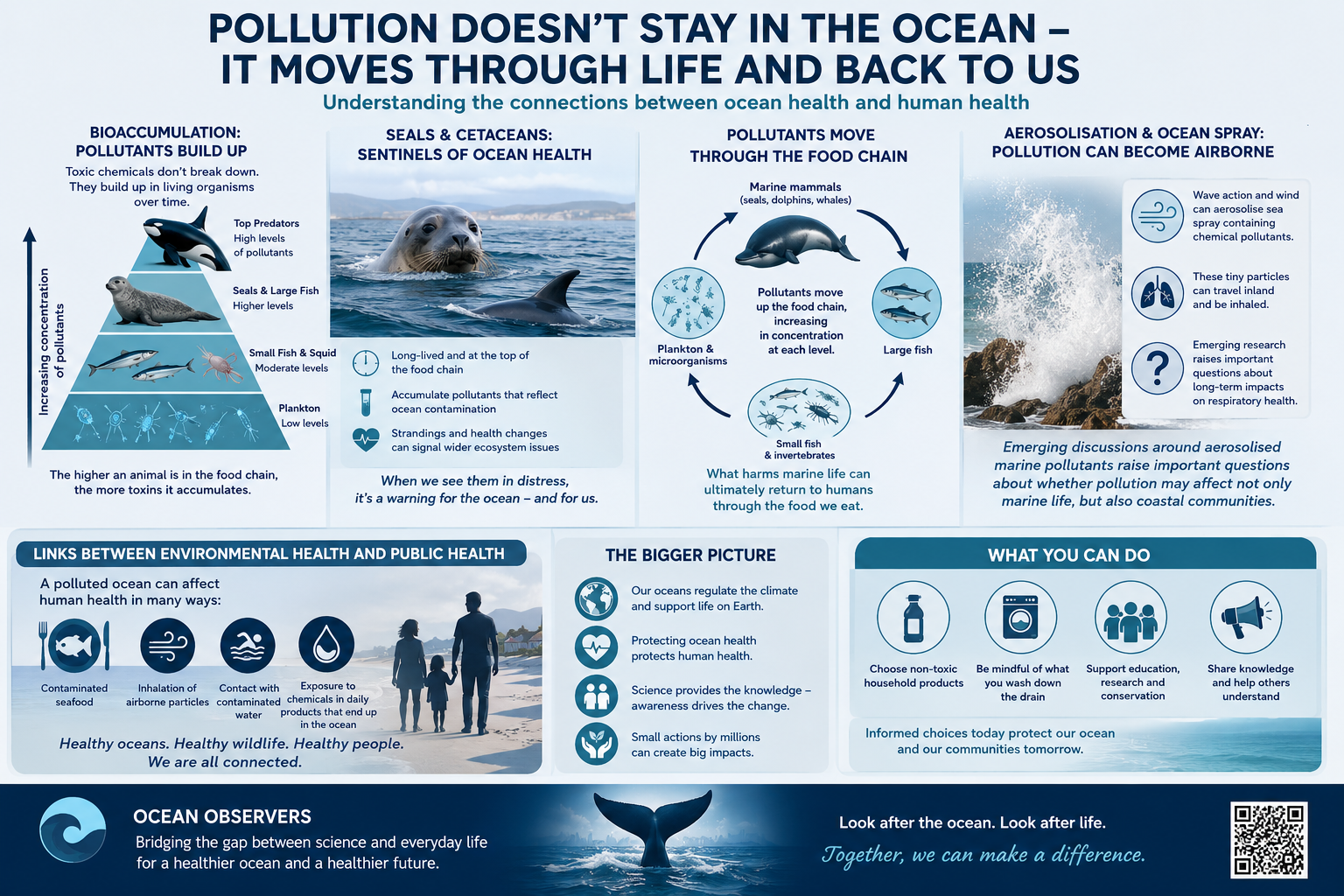
Once in the ocean, these chemicals don't disappear. They bioaccumulate — meaning they build up in the tissues of living organisms. Plankton absorb them first. Small fish eat the plankton. Larger fish eat the smaller fish. Seals, dolphins, and whales sit at the top of the food chain, accumulating the highest concentrations.
And then? Through the food we eat, the water we drink, and even the air we breathe, these pollutants return to us.
Aerosolisation: The Invisible Threat
One of the most surprising — and concerning — pathways is aerosolisation. Wave action and wind can aerosolise sea spray containing chemical pollutants. These tiny particles can travel inland. Emerging research raises important questions about long-term impacts on respiratory health in coastal communities.
What You Can Do
The good news: small changes at home create cleaner oceans.
- Switch to non-toxic household products — look for PFAS-free, biodegradable options
- Be mindful of what you wash down the drain — medications, microplastics, harsh chemicals
- Support education, research, and conservation organisations working on these issues
- Share knowledge and help others understand — because informed choices today protect our ocean and our communities tomorrow
Healthy oceans. Healthy wildlife. Healthy people. We are all connected.